
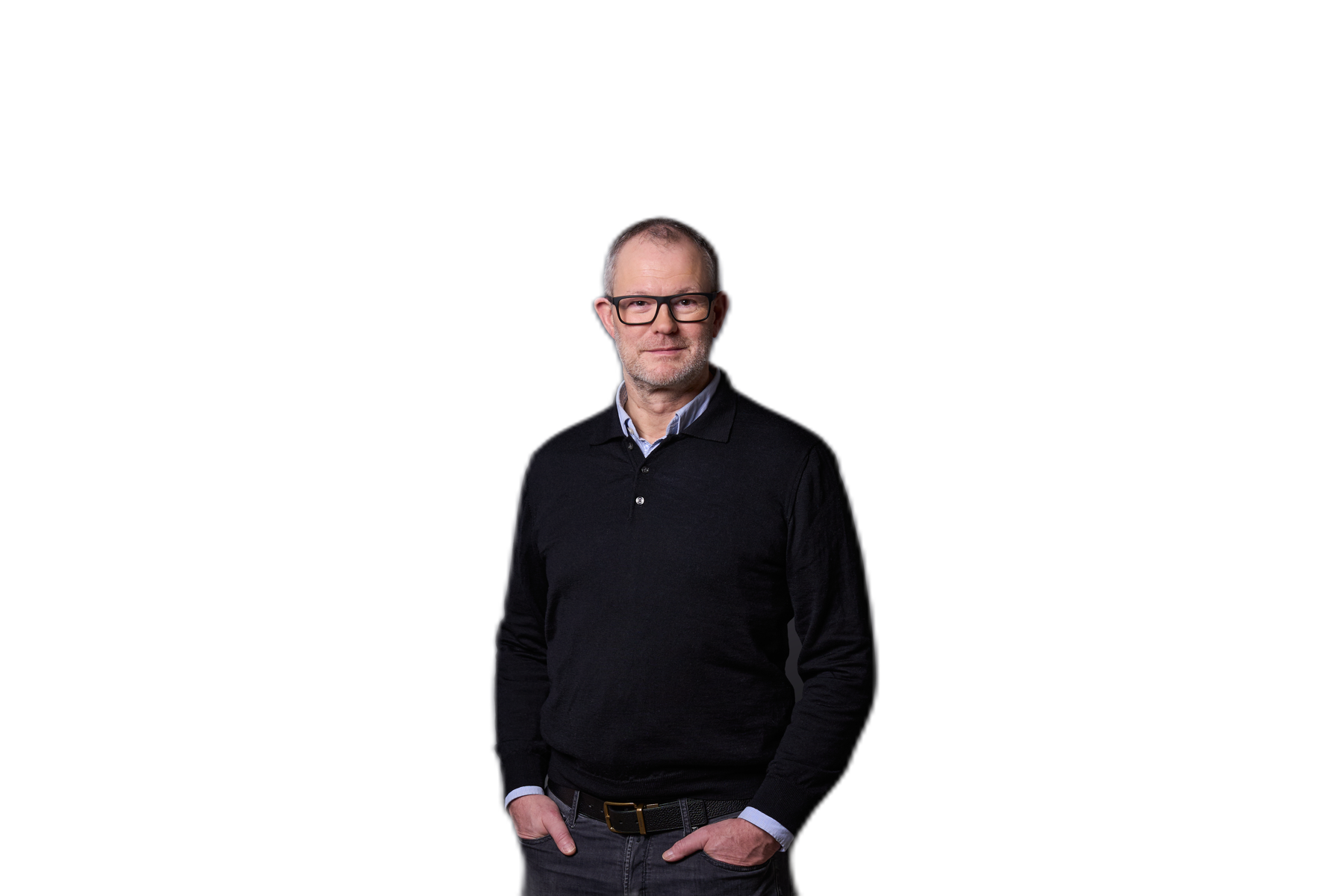
The conversation as it happened, lightly edited for reading. Christian asks, the guest answers.
Christian: Look Achim, 25 years, two IPOs. You've been in so many different startup biotechs and now you're changing the sides. Helping other people to do what you did. Why are you doing that?
Achim: Well, I like changing perspectives. It started with my, well, I loved my academic time, doing my PhD in genetics and so on. But at the same time, I knew I was a generalist, not a specialist, so that was the first switch of sides, really. And at that time, somebody in life science switching to industry was basically, I mean, my PhD didn't talk to me for five years. It was so sulked. And I was told, I'm moving to the dark side. And then I really enjoyed that dark side for 25 years.
But then I also thought, having done lots of fundraisings, I've been on that side. But basically, you just stand for one story. You pitch your story, you pitch your current company, and try to get it funded, and so on. And ironically, when I was approached with the idea of joining HTGF, my first reaction was a little bit, what? Because that could be interesting, to switch sides again. And I was told, that's really the dark side, that's where the cookies are. So I thought, okay, well, let's do that step.
So I was really curious. And over my whole career, I like to, yeah, just expose myself. Leave my comfort zone, do something new, explore things. And I was lucky, I had, so far, not a single dull moment in my career. And that is true for HTGF, too. I love that step, that move I made. And it's so much fun working with a team, and it's so interesting to see the whole business from that side, and also get a bit of a broader view on many different companies, different management teams. So I think that's the experience from the management side in there. I didn't regret it.
Christian: What I'm also interested in, everyone I have on this show actually has a period they usually don't talk about much. Very different and difficult time for them, very often. But it also shaped them. What was yours?
Achim: It's a good question. I think, in general, if you really stand for an idea, and you have this idea of some innovation in the medical space, very complicated, biology is highly complex. And certainly you have sometimes your doubts yourself, is that really a good idea to go there and so on. And that's a big struggle, to overcome that and say, no, I don't, I mean, look at data, be data driven and all, but believe in your idea, you know, belief. And that's sometimes hard, and sometimes it's very hard to share. Because I think every founder and entrepreneur in that space has those moments.
But if you shake, the entire company shakes, and so you have to really keep your vision, and the most important thing is to understand what you can do. Understand where your weaknesses are, and find people who compensate for those, and I think that's absolutely key. And also, you don't want to be in those situations where you want to openly discuss also your doubts, you have to put yourself in an environment where you can do that to some extent.
And then things get easier, the moment you have achieved that, when you build a team around you, when you can be very open, and not problem oriented, as we ever so often are, but solution oriented, say, Hey, we're in difficult, rough waters here. Choppy seas, so what can we do, how can we stabilize the ship? But if you can't do that, and everybody has those moments where you feel no, I can't, that's not challenging. So yeah, have that confidence.
Christian: You talk about professional moments in past companies. But you weren't probably in companies that were public at that time.
Achim: Both. A lot of them were public companies, because that was the way we did IPOs. I joined two companies just before IPO, and then in the first case I was more in a supportive role in the IPO, as an expert. And in the second case, I was doing the IPO together with the CEO. And then you're public, that's just the nature of things, but I have also been in private setups. So I've seen both sides, the VC side as well as the public market side, and the public market side is, in many ways, even tougher. The way you can communicate and so on, and the way you're scrutinized by investors is different.
Christian: You moved very quickly to the learnings and how it shaped you and what you learned about moments, but you didn't really tell me what kind of moment there was that was difficult for you, that had this impact, that had this power to shape you.
Achim: Well, obviously, when you do these IPOs, they are like a thriller. You never know whether they work out, especially for relatively early stage tech companies in Europe. You never know until you close them. In my second IPO, we were on a roadshow. And up to the very last day of the roadshow, it wasn't clear whether we could fill the book. And it was just sitting there in Zurich, last stop, and you sit there at breakfast and you don't know what will happen in the evening, whether you have to call off the IPO, or you sail through. And the memory is still there. And then suddenly a call comes from an investor in London, who we talked to the day before, and he said, yeah, well, I'll put in a lot of money, but please, don't go at the lower end of the price range, go middle, send a signal of strength. And suddenly the book was totally oversubscribed, from one, because then everybody jumps on it.
Things like that, and I can tell you, I can spend hours, I can write a book on those stories. Where we had set up a follow-on, and we were just two weeks ahead of basically having to refile the papers with BaFin, knowing that the cash reach wouldn't be long enough to have the company survive until BaFin gives us clearance. You have the last shot. And then there's a moment where the investor you're talking to stands up, stretches out his hand and gives you a handshake, so do we have a deal? And you made it, last minute. As I said, it's thrillers. But somehow that experience of, stick to it, stay on it, believe in it, bring it home. It's easy when everything is smoothly working along. But keeping that spirit when you're really in that situation, keep it going, keep pushing, that's tough. It's really tough, and you learn a lot about yourself there, about your resilience, your preparedness to stand for a story, to really break.
And that meeting with the handshake, one hour leading to that handshake, the analyst was grilling me on nitty-gritty details on some pipetting schemes of some diagnostic assay. And you just sit and say, guys, we're running out of cash, I can't have those discussions now, they're irrelevant. But you have to sit that through, that's true, and you have to keep the patience, you have to keep going. It's a stress test, and probably that's part of the assessment too. I learned a lot about founder teams that I see here now, how they react under pressure. That tells you a lot of stories, whether they will have the mindset that they need to really bring it home.
Christian: But it also sounds to me that you needed that story in order to have the strength, or the certainty, I'll manage it, whatever comes. Right? So can this come from someone who didn't have the story?
Achim: So it kind of fertilizes each other. And the more you realize, and that's the experience part, the more you realize that if you really have the right conviction and you can bring things home even in difficult times, it makes you stronger the next time, because you start trusting yourself more. So it's sort of a process.
Christian: Have you thought about how this shaped you as a professional, as an investor now?
Achim: Oh, true, absolutely. I know both sides. And I have a good feeling, hopefully, of what makes a good team and what the mindset has to be. Because I did every possible mistake one could do. I survived them mostly, but I did them all. And I know what led, in my personality and in my skill set, to those mistakes. And then you start screening the team that is in front of you. Do they have that? They don't have to get everything right in the beginning, but they have that mindset of continuous learning, of being brutally honest to themselves, and also understanding where their sweet spot is, where their skill set is. I have very few management philosophies, and one is, I want to be the most stupid one on my team. Then I feel very happy, because I know my job is not to be the expert, it's more bringing things together. But I need the experts, and if my level of expertise in certain areas is the upper limit, the company is doomed. Things like that, I just have very few philosophies, but I believe they got me very far. Very simple rules.
And once you have that experience from that side, you're relatively good at understanding whether the team in front of you may bring, or has the potential, they don't have to all bring it, but has the potential to really see the story through. And also knows where their phase, their sweet spot, is coming to an end, and when they need to step back and bring someone else into a leadership role and so on. That's also part of the game. You understand where your limitations are, and then deal constructively with it. Not just let it happen and then some board tells you, hey, I think you have outlived yourself, but rather bring it up yourself. Be in control of even that process of transition, if necessary.
Christian: We all know this is a great theory, and I also speak a lot about stage fit, is the leader now the right one for the next stage. I think in practice it's super difficult to understand that. What did you see, were there founders who recognized it early and said, hey, next stage is on, series B, whatever, I'm out, this is not my stage. Did you see that happening?
Achim: It does happen, yeah. But certainly it's never a clear-cut process. There's always some phase where that's a struggle. But then there is a group of founders who eventually say, yeah, I understand. I will still benefit from it. I'll benefit more from it when I put it now in the hands of someone who can make it successful in the next phase. I have stock options, shares anyway. And sometimes it needs, let's say, a robust discussion with a trusted person. I did some of that before I joined HTGF, not anymore. I also did a lot of consulting, so I saw a lot of companies beyond my own companies. And often I was called in by the board, because they said, well, we have a feeling something needs to happen. And then there were cases where you just take the CEO, during some conference somewhere, you take a nice bar, you sit down with him and have a couple of drinks, and then you say, look, it's relatively simple. If you raise your hand now and say, let's discuss what's the best leadership for the next phases, you're in control, you drive the process. Or someone else will drive it for you, and that doesn't feel good. So let's go there. And sometimes they listen, sometimes they don't.
In one particular case, eventually the guy said, hey, I understand, I'm more the tech guy, I'm also a science guy, now a professor again, back in academia. The company developed nicely, was eventually exited, and everybody's happy. I can't give you exact percentages of where it works and all, but in the end it's often about having a triggering discussion, saying, hey, let's think about what the next phase will require and so on. And then you have these people who say, yeah, I get it, and I'm open to have that discussion, and others just stick on, and eventually nobody will fund them anymore. That's sad, because often enough that doesn't mean that the story is bad, but it's just not a trusted leadership.
Christian: And that's already an escalating discussion that you talk about somehow, because you are the initiator, as a board member, investor, whoever. Is there a phase before where a founder might think about, well, look, I'd like to stay in pre-seed, I don't want to go into series A or B or whatever?
Achim: Conceptually difficult, especially when you have a VC on board. You do have early changes in management often, where people just start off with a pretty naive idea of what it means to start a company and the burden it takes on you. And then they raise their hand early and say, those first initial steps were okay, but I don't feel comfortable with further steps, and that's okay. Often enough, these teams, and that's a bit of a challenge, they meet at universities, if they're first-time founders, they come from the same probably institute or even group, and that's a bit problematic, because that doesn't necessarily mean they have complementary skill sets. They have all the same DNA, but what you need in a very effective management team is ideally very different skill sets, and you don't usually find them at school or at university, in the group you do your PhD in or whatever.
And far too few founder teams actively look at complementary skill sets from the beginning. So there is an awful moment, even in the seed phase, where that needs to be sorted out. But you also have those who say, hey, I now realize that it doesn't make sense for me, so yeah, I'm out again.
Christian: But usually it's the investor or the board who sees the problem and initiates the conversation.
Achim: Right, exactly. It's also our job as an early stage investor to point to the things that need to develop in the team. And sometimes you realize, well, that won't happen in that particular team, and then you also help to find replacements and find people who can complement the team.
Christian: And how long do you invest in coaching until you say, okay, it doesn't make sense?
Achim: It's very different, you can't generalize it. But there is a lot of hand holding in that very early phase, especially with first-time founders. There's a lot of work to be done, and that's what keeps our investment managers busy. Keep in mind, in life science, we are about 20 people a year that do the investments, and they can have a hand or two handfuls of portfolio companies, and ideally only three or four in this very early stage, because it's very time consuming. To really go in, you have a very direct interaction with the management, sometimes on a day-to-day basis in critical phases and so on. And that's okay, that's our job.
It's our job to get them there, because we're a public-private fund, so we have also a bit of a mandate to get those companies going. They have to be great ideas with lots of financial potential, exit potential, otherwise we wouldn't do it. So we're not different from private VCs. But we see that hand holding, that support of the management team in that early stage, and also getting them ready for the next round. Because if they're not ready for the bigger tickets we see they will need in that next round, then our investment was in vain. So we see readiness continuously. They have to be sort of ready for us, but we ideally can also help them to be ready for the bigger guys that do the next step, the bigger tickets.
Christian: Talking about preparation, it also means you see patterns of failure. So what are usually the patterns you see and want to avoid when you work with early stage teams?
Achim: Often enough, because we invest in tech companies and especially life science, it's like technology seeking a market, and that's a bit of a dangerous game. Because if you focus on a problem in a market and you're agnostic to the solution, you're much more flexible. You keep an eye on that market opportunity and you use whatever solution may come across. Now that's not the reality for very deep tech, very tech-driven startups, because naturally what comes out of university is a tech. And then sometimes you have to say, well, I thought I had a market for the tech, but it may not be that market, so you have to pivot for another market and so on. But that is often a breakpoint, to not have a product market fit but at the same time be tied into a technology. And then what can you do?
If your claim to fame was a technology but you don't find the product market fit for that, you're in trouble, right? That's an inherent problem of that. And then you need the flexibility on the founder's side to say, well, I have a better understanding of what value my technology can bring, in what market, for what solution, and then make a pivot. And frankly, I don't think there are many success stories, especially in life science, that did not at some point have to do a pivot. And then you need a founder team that is prepared to do that, and not stick to the original idea even though all the indicators point against it.
Christian: So you're preparing all the teams to think about a pivot.
Achim: Well, obviously first you assess them on the original idea, because that's what you invest in. But sometimes it's important to point them to the red flags slowly coming up, and you say, hey guys, there are red flags, let's discuss them. Let's maybe understand what's behind that. And obviously it doesn't mean that with the first obstacle you encounter, you give up. That's stupid. You have to believe in it. And that's probably the dilemma you're in. You want that absolute conviction in your founder team, at the same time you want them to be flexible when a pivot is needed. And I know that's a terrible demand, a terrible request to make. But as I said, it's important, because rarely does a story develop exactly the way you planned.
Christian: I think that's the only way to go, right? You have to test, to do everything that's possible within a certain story.
Achim: Right. And certainly, keep in mind that you have to watch your cash reach and the patience of your investors and so on. But yeah, not give up too early, but take what you learn from data, and then be brutally honest to yourself. I think these are important requirements. And also, really have a transparent dialogue with your investors. I had to learn that the hard way in my own career.
Especially when you're still private. Public is a different story, because you don't really know who you're talking to. It's an anonymous group of people. Certainly sometimes you have a certain percentage of your shares with an institutional investor and you can reach someone, you can talk to the analyst or whatever. But often enough the prices are more made by retail, and that's a very amorphous, very hard to reach group. And your only tool is broad PR, because you have to make sure everybody knows the same thing. If you're still private, different story. And I think it's very important to have a very transparent dialogue with your investors. Not panicking, but solid, well prepared, but transparent.
And I can tell you, just this morning, we discussed a little bit what are good candidates for follow-on investments. Your fund volume has a certain limit. So you think, how do we allocate to the story. And a lot of the performance of a fund is actually, especially as you invest very broadly in early stage, the first check is very broad. But you have to see, the fund performance is how you deal with the follow-ons. Where do we allocate the money in the portfolio? And often enough in that discussion, it comes up, well, the CEO doesn't share anything, we don't know what's going on, we are blind. We don't invest. So it could be that the story is great. But if people don't share, if they don't talk with us, if they're not transparent, then that's a red flag for a follow-on investment. Very simple. So it has direct implications. And in the end, there's always a moment of truth. So you'd better have it managed than just have it creeping up on you. But then you're in a defensive position.
Christian: So you're expecting actually potential portfolio companies or portfolio companies that you already have to talk more than less?
Achim: Not more, but effectively and transparent, and raise flags early. The last thing you want as an investor is to be surprised. And keep in mind, we see failures, we see lots of things, we need to see successes. That's all in our business. It's not like we don't know that problems come up. We have seen them all, in 20 years and over the team, so it's business as usual for us, and we can deal with it. But bring them up early, bring them up with a good analysis, bring them up with potential solutions and preferred solutions, and then we can discuss.
But don't ever surprise your investors with bad news. Unless you have a clinical trial, and there is this one data point released, and it's either fail or not, well, then we are in the same boat. But don't withhold information you have, because in the end you will have to disclose it anyway, only then you're in a stress situation, and you also may not have the time anymore to come up with a solution. So it's better to bring it up early. We know that problems come up. We have a current portfolio of around 400 companies, we invested in around 800 companies, we have probably seen any possible problem that can come up. And we may have solutions, we may have ideas on how to deal with it, so bring it up early, before it's too late.
Christian: Yeah, I assume that you have some pattern recognition through all the experience you just mentioned, but still, there is a kind of conviction, gut feeling, emotion involved in some way. What I'm trying to understand is, have you ever looked at a company, a biotech, where the science was excellent, but the odds for success were really difficult, but you did it anyway, you still went to invest with that company, and why, what made you do it? What about you?
Achim: VC is an outlier business, so sometimes the real success stories, in terms of the multiple you can achieve on an investment, are the weird cases, not the mainstream ones. Mainstream means all the other investors see it too, there's a lot of valuation going up because there's interest, a lot of money is put in, you're diluted. So yes, you make a decent multiple on an exit, but it may be 3x, 4x, 5x or something like that. But if you identify those outliers where you say, wow, that's a weird story.
One of our, frankly, biggest fund returns, we almost discarded in the initial deal flow screening. Once a week we sit together, we look at all the pitches coming in. So I had a close look. And it turned out it was our best fund return, because the company needed very little money to get to an exit. It was a unicorn exit. And we still had a very decent percentage in the company. And it was one of those outliers. And now, what is it? Is it gut feeling? Is it rationally seeing a certain market niche or so? But in the end, I think the big fund returners are often enough those outliers, that you need some sort of appetite for risk and adventure to go into, and that appetite is an emotional thing, it's not entirely rational.
Christian: Tubulis was acquired by Gilead a couple of weeks ago. And I'm wondering, is Tubulis a blueprint for your portfolio companies? Is that the story you wanted them to have? Or do you wish them to have had a different one? Or is it just a story?
Achim: Well, depends on how you look at it. It is a prime example of how we want to work. We knew the founder team, I think, I wasn't there at the time, so fair, but about two years before they even started the company. At that time, antibody drug conjugates were sort of avoided by investors, because there were some failures and so on. But we believed they had a solution to that problem. And the general idea of antibody drug conjugates was a great one in the first place. So one of the investment managers at the time thought that they may have the solution to overcome the problems that others were facing. And sometimes it's also good not to be the first one trying something fundamentally new, but to learn from the others and then go. Even big pharma companies sometimes have that strategy to be second to the market, but take all the learnings from the ones that burned themselves before on a new modality.
And then it was very hard to put together the first round. They stayed in academia as long as they could, so longer than most, which probably is a good idea, to de-risk as much as you can still in an academic setting. But it was very hard to put together the first round, because the antibody drug conjugate story in general was burned. But then the team did an amazing job in developing the story, the pipeline. And then you could see, in the following rounds, suddenly more and more interest from bigger funds and so on. And keep in mind, just a couple of months ahead of the exit, they did the largest life science round in Europe, 344 million or something. So wow, quite amazing.
Now, is there anything, very little left to wish for. Amazing exit, amazing pipeline. I think it will be a game changer for patients, which is very important to us too. We are very purpose-driven. So what is left to wish for? Well, if you look at the cap table, all the rounds, you see more and more ex-European investors in there. In the end, the exit happened to the US. There will be some value creation in Germany. They committed themselves to have certain operations still in Germany, but then you never know how that will develop over time. So if we could keep such a story really in Europe and probably also get it through IPO, then I would be even more happy than I am now. But kudos. An exceptional team that I really managed to take it from the beginning to really the exit.
Dominik comes from a very entrepreneurial family. So there's probably some effect of that too. But that's great. We need more of those people, and I hope that some of that team will just go in and do the next company eventually. Because we need those serial founders in life science. And that's not so trivial, because the cycles are so long. If you look at the digital space, cycles are much faster. So we have far more serial founders there, but we deal mostly with first-time founders in the deep tech and life science space, because of the time it needs to get a story to fruition.
Christian: You once said Europe doesn't have a talent problem, it has a funding problem towards the late stage. I think I read it somewhere.
Achim: Yeah, sounds like me. Oh God, now I'm at that stage where quotes are thrown at me. My own quotes.
Christian: I mean, I share the same thought. I'm not challenging it. What I'm trying to understand is what kind of funding problem do you see and how do you think it can be solved? Because we talk about funding problems in Europe in comparison to the US for decades already. This is nothing that we have to fight over. This is clear. The question is, how can we really solve this? Do you have an idea about that?
Achim: Part of it is probably a bit of a time problem. If you look at the life science deep tech space, the US clusters are probably 20 years ahead of us because they started earlier. So one thing is to understand, we are on a trajectory, and actually that trajectory doesn't look bad, but things need time. Because in the end, if you look at the functioning ecosystems in the US, and I'm now quoting someone who was with me at a conference and looked at it a bit deeper, Mattias Lotz from Start2, in the end what really makes a difference in those ecosystems is that there are cycles of talent. So you have successful founders that exited, go in, start the next company. So a talent cycle, and you have a capital cycle. So exit money flows back into the ecosystem. Once you get that going, those hotspots really become self-propagating and strong. In Germany, I think we are not there yet.
But in general, it's true that we do have a funding problem. We got better in the early stages. We can kick off companies, but then seeing them through with sufficient capital to really make them grow fast, or go through clinical development if it's drug development, can be fast. I think there is a lot of gap, and we see an interesting pattern. We do see more money flowing into the space in Europe, but it's typically in very late stage, very few companies, very big rounds, and Tubulis is one of those examples, a late stage round where suddenly everybody wants to be part of the story, right? And in between you have this valley of death, this A, B, where you still haven't done that much de-risking or shown that much proof of concept in the market and so on. And that's really a challenge.
And so I think that challenge would go away if you increase the general amount of VC in the market. Because at the moment, certainly as an investor, I look at where do I have the best risk benefit profile, and if I can get into those late stage rounds that have that profile, I'll do it. Now, if there's more and more money, those rounds become more competitive, and then money will increasingly also be invested in earlier stages and so on. So it's just a matter of scale, of the available funding. It's a market. But that means in general we need to mobilize more venture capital.
And okay, we are a public-private fund. We also have purely public vehicles on our platform, but that can only be catalytic. It can only try to help mobilizing private capital. That's why we are also, kind of, stringent in where we invest, because it doesn't make any sense to invest in stories where we don't believe they're great and interesting for private investors too, because otherwise we would have a crowding-out effect instead of a crowding-in effect. So we need to be a green flag as a public-private investor rather than a red flag. So that's important, to really make the case for very, very good stories.
But then in the end, there is enough capital in the market. It's just not allocated to venture. That has a lot to do with risk perception and so on. But in Germany it also has to do with the fact that we don't have those large pension funds, because of how our pension system works. So we need to mobilize money from those big markets. And it's ridiculous what amount of money you need. We talk about 1 or 2 percent, that will be enough to be a game changer for the VC world. We're not talking about horrendous portions of the money that is available for pensions, for life insurance, whatever, to really change the game.
And politics has understood that and they're working on it. They're trying to lower hurdles. Also we try, there's a lot of education, because frankly, lots of those funds could invest in VC, but don't know how, don't know what it means, have a risk perception. We just, together with 23 other VCs, published a playbook, addressing those myths. Saying, if you spread it properly, certainly we don't expect a pension fund to do single investments into individual companies. But if you spread it over a certain amount of funds, and fund of fund investments, actually there is no empirical proof that this is a bad idea, and just the opposite, it is actually a very good idea, also from a financial returns perspective. So there's a lot of myth in there and we need to all educate on that, to mobilize that money.
The German government just published the new startup and scale-up strategy, and a lot of those measures aim at mobilizing more private capital, by making it easier, lowering hurdles and so on. And so, as I said, I think we're on a good trajectory. It still needs a lot, and it'll be nice to have more money already now, but as always, all this takes too long and all that. It takes a little time to find consensus. But I don't even want to think about alternatives to that slower process. So if I have to choose, I choose the consensus building over the alternatives. Yes, for sure.
Christian: I mean, you started in HTGF and now you're taking on the Deep Tech Climate Fund and basically you're building the next seed funding for Germany. But what I try to understand is, is this for seed or for later stage? Are there bigger tickets?
Achim: Very good question. And that's exactly our response to that. That's also a mandate we have from the federal government, to basically now replicate the success we had in seed funding in the later stages. And so we continue with the seed funding. We are just raising the next seed fund, again with public money, 70% already committed. And now we're doing the fundraising for the private part of it. And first closing is mid next year or so. So we continue doing that. We continue to feed in startups with the initial check, to give them a chance. And we also have a bit more flexibility in how much money we can allocate per company in that fund compared to previous funds. So we can do larger tickets, which is great.
And then we have the Deep Tech and Climate Fund now on what we call the platform. And that is purely public money. And the idea is to go in rather at Series A, B. So a little later than the seed funds, and also write much larger tickets. In the future seed fund we can do up to 10 million per company. So the best ones can go up. And in the overall follow-on rounds in total, certainly the initial tickets are lower. And then in the DTCF, we can go up to 30 million or even more in certain cases for a company. With that, with these instruments on the platform, we basically can take companies from pre-seed stage to exit and always have a vehicle to invest.
Christian: And is the DTCF limited then to the categories, deep tech and so on? So deep tech, I think, technology, space.
Achim: All our funds are tech based. The seed funds are very broad. We have formally three sectors: life science, chemistry, which I'm heading, and digital tech, and industry tech. In the Deep Tech fund, most of the portfolio would fall into the sectors of industry tech, deep tech and life science, chemistry, not so much in the digital space yet, but in the end it's a fairly broad scope. We have investments in Proxima Fusion, for example, but we also have investments in agri tech companies, and so on. So it's quite a wide range.
Christian: I want to pick up on an idea that you just mentioned through the conversation. Germany probably has not enough serial founders. And my thesis around that is, if founders would understand that early stage is their turf, they would rather go earlier to that stage, back again. Early stage draws people who are motivated by uncertainty. They embrace uncertainty. They want the variety. Would this be the better way to think about serial founders?
Achim: Good point. I think you're putting your finger on the right spot there. I think it's a cultural thing. So in theory, you're right. You have a founder, perhaps the first company was out of university, and they bring it to a certain stage. And then the problem is, if that is a kind of conscious decision by them to say, okay, that was my phase. Now I'm getting out. I'm happy with that. I go back to the beginning. I look at some academic asset, perhaps some even academic founder, but I join the team. I have my experience. But often enough, these transitions in management are choppy. And probably what remains is, oh, I failed. I didn't see the company through, I failed.
And then there may be, I don't know, I'm not in their heads, but there may be an ambition then to say, no, I did exactly the right thing. I took the company from there to there. Now I exit and take the next company from there to there, and sort of stay in my sweet spot of company lifecycle. But I think the reality is that this is often a, say, traumatic experience for those founders that exit, because it's probably also, often enough (we discussed it), not a self-determined exit, but rather brought upon by the board or something. And then they retreat back into academia or back into an employee situation and so on. And that's a shame, and I think we need to fundamentally look differently and change the culture on that.
Even stories that failed scientifically. We're talking about biology, and my last company failed on biology. It's just reality. And that's not vanity or anything, we have shown at the highest level of quality that the biology didn't hold up. And we basically, from that point, prevented investors from putting more money into a dead horse that will never ever go anywhere. Do I see that as a failure? Probably 20 years back, I would have seen it as a personal failure. By now, I think no, it's not. We just faced biology that didn't hold up. Biology, to be honest, is still a big black box in many ways, as much data as you may have. So you just shake yourself once, get up again, do the next story.
And that mindset, not being traumatized by that situation, but saying, no, I forget it, go back to the beginning. We need to culture that. And then someone else takes over and probably does the productization of a technology and the market introduction. But then at some point they have to realize, well, I'm not the one to scale the market. So I go, I get out, I go back. In the later stages those cycles probably work better already. But in these early stages, where there are really the initial founders, it doesn't work very well. And that's a shame. Because even if I failed for scientific reasons, whatever, in that particular story, the knowledge I get, the experience I get, is invaluable for the next round, for the next startup. So I wish that they all would go back and look at universities and say, hey, where is the team that probably needs my expertise, my experience? Go in, take the next story, and take it out again. So I think we really need to change the culture a bit.
Christian: Yes. Nothing to add. Very good. Thank you. And my last question is actually, when you look at, let's say, someone listening right now who has the idea that they would like to start something new, and they're waiting for permission for academic reasons or something else. What do you tell them?
Achim: Don't wait. Don't wait. Talk to us. No, seriously. If you wait for permission as a founder, you may be on the wrong track in the first place. We just, as I said, the government just launched this scale-up startup strategy, 150 measures and so on. That's great. I really appreciate a lot of good stuff in there. But would I wait for any of those measures to materialize before starting a company? No. You can today start a company in Germany. You can just go there. Yes, sometimes the negotiations with the tech transfer office are tough in universities, because that's still something we need to fundamentally improve. But still, I can start a company, and I just go for it. And go for it. Talk to us. We may help you. We have lots of experience. And nothing should stop you. Just do it. Be fast. Ignore the obstacles. Just go. Don't wait for anything.
Christian: Thank you very much, Achim.
Achim: Well, thanks for having me.
If you think you need to talk to this guest, reach out to me and I am happy to make a connection. Christian Rados, christian@rados-recruiting.com
All episodes and the problem pages