
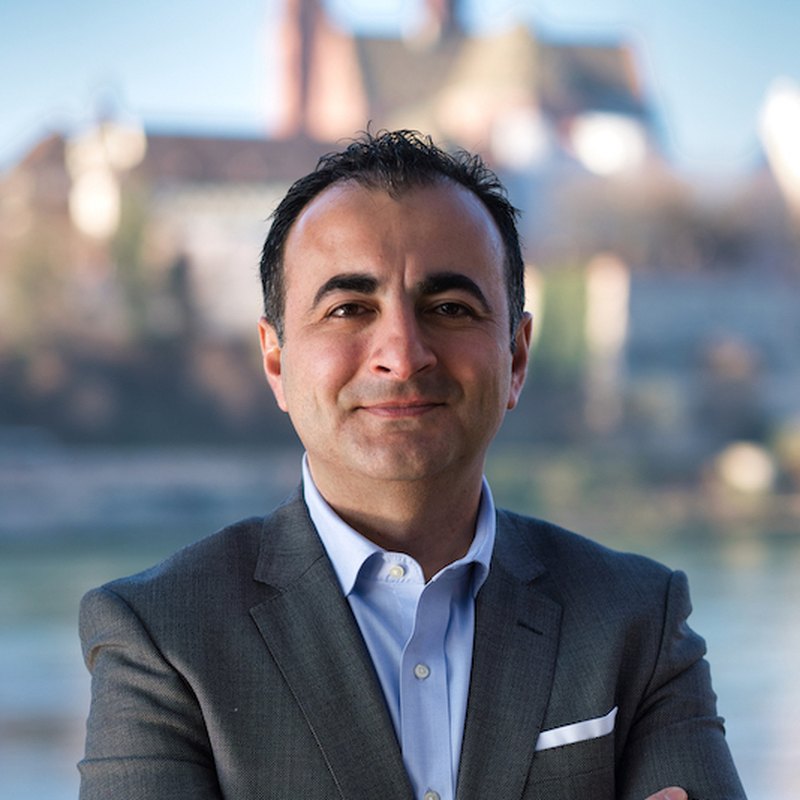
The conversation as it happened, lightly edited for reading. Christian asks, the guest answers.
Christian: Tell me, how were the last 12 months for you?
Sezai: The last 12 months were a rollercoaster, I would say, ups and downs.
Christian: What was tough, actually?
Sezai: I think the toughest moment was always getting no's. I think that's not easy for anybody. But also pushing the no, because a lot of time people don't want to say no, they don't react, they don't answer. But I think asking for a no is also very important. But getting it is hard. So if you get rejected, it's hard. I think also what was hard is we've been twice very close just before the finish line and getting a no or failing, just failing down just before the finish line.
That's very, very hard.
Christian: When you talk about no's, what kind of no's are we talking about? We talk about investor calls.
Sezai: Yes. And we've been trying to raise our Series A in the last two years. And obviously, the no's in this process are really tough, especially when you feel like it's a no, but with a but, where you think, okay, there's something missing. That is a pity that we couldn't solve or that we couldn't provide.
Christian: Did you have a different expectation when you first came in 24 months ago, I think, right?
Sezai: Yeah, 24 months approximately. But I don't think anybody gets used to just getting no's. And you also work with clients, I guess, you also have sometimes no's, which is tough as well. You need to try to get the best out of it and learn from the mistakes, but also the reasons why there is a no.
Christian: You said you were two times very close to a yes. Tell me about that, how you felt about that on the next day.
Sezai: Oh, wow. I think the first time it was brutal, and it was also brutal because it was a Friday afternoon, late afternoon, and getting it before the weekend, especially when you usually have more time with your family, and when they also realize something didn't go well, it was brutal. Because especially I thought that there was a slim chance of a no. But it was brutal because you're coming from a high, you know, falling down a cliff, right?
Christian: Wow. That sounds devastating.
Sezai: Yeah, it is. It was, I think, especially the first time, it took me a couple of weeks, I must say, to recover. I mean, recovery in a sense of getting motivated again, and going out with confidence again, because getting a no at that time also impacted the confidence that I had at that time.
Christian: So you were at an almost yes, then the definite no came the first time. Who did you call first?
Sezai: During these moments, I usually call my wife. Because at the end of the day, the family and your wife is your strongest supporter. And I think that's the person that should hear first from you before you talk to anybody else. But obviously also our co-founders afterwards, who are impacted as well. But those were the two. And then, obviously, with friends and so on later on, just to digest and discuss and learn from the experience.
Christian: Yeah. What did you tell your wife?
Sezai: I actually don't remember. But I think I just said, listen, it just didn't work out. They somehow, somebody decided not to go with us.
Christian: I think you kind of also filter what you say to your wife, so everybody can live with it.
Sezai: No, no, no. I mean, obviously, you filter, you want to keep certain things for yourself. And definitely, you want to make it sound as a positive no, even though it is not. But at the end of the day, you say, listen, it didn't work out, but I think we've learned a lot, and now we start on Monday again to move forward.
Christian: Correct me if I'm wrong, it sounds like you also had to pitch to her that this is worth pursuing.
Sezai: Definitely. I think at the end of the day, when you go a path that I went, and when you say basically, I'm going all in and I believe in an idea, believe in a company, that could be any, you need to have strong supporters. But most importantly, you need to have a family, in my case my wife and the kids, that basically believe in you and have no doubt that it will be successful. Because if they start to doubt and ask questions, then you start to doubt. And then you're like, okay, is it really the right path? Is it really a good path to go? Or are they impacted, and am I doing something right or wrong?
Christian: I'm wondering if you ever told her how important she is as a pillar for yourself to move forward, as an anchor.
Sezai: Yeah. As I said before, I think having somebody who truly believes in your skills and supports you. At the end of the day, if you have somebody at your side where all the risks and benefits you join together, and you see the risk very high, you need to have somebody who believes in you and who goes the path with you. There are a lot of times that this situation doesn't go well.
Christian: Yes, of course. I mean, I have a wife, a little kid, running my company, and there's always a price to pay, whatever choice you have. And if your partner is aligned with the price you're paying, whatever it is, then it's fine. I think that's right.
Sezai: Being an entrepreneur in one or the other way, she has, for example, her own photo gallery. I also have other friends who have their own companies. As you said, people think very romantic about it. I want to open a coffee shop, I want to build an HR consultancy company, I want to build a biotech. But you basically need to understand that you need to accept all the risks that come with it.
It's your responsibility. You wake up in the morning, you work, you do something, and something works out, it's your responsibility. If something doesn't work out, it's your responsibility. It's up to you. There are not that many people you can rely on.
Christian: Or you can blame.
Sezai: Yeah, exactly. Blame the processes, blame the team.
Christian: Now I can only blame myself.
Sezai: But it's really, at the end of the day, that's what I like. The decisions you take are always your decision and your responsibility. So you can't blame anybody.
Christian: If you're in the trench, it's never easy. But was there a moment when you said to yourself, look, maybe I need to stop?
Sezai: To be honest, Christian, I think there was no single moment where I had a hard think about it. You question things and you say, okay, is it really the right thing to do? But I always believed in our technology, in the data that we have, in the company, in the moment that we are in. I always believed, and I still strongly believe, that we are just with the right product at the right time in the right place.
Christian: So the Monday after, you started pulling up your sleeves again and said, okay, hey, what else can I do? Did you have other investors aligned on a different stage?
Sezai: At that time this was a discussion with a large pharmaceutical company and we were discussing a potential licensing deal, and a large one. It would have been a really big licensing deal for the German market, for a company that has just little funding, comes out of the university, a small team of three, four people believing in something. We actually had to work full on on this path and on the discussion with this company. And so there were not that many lined up, I must say. There were two or three other ongoing discussions.
But as we were a small team, we really put all eggs in that basket, if you can say that.
Christian: I assume a licensing deal was plan A.
Sezai: Definitely. I think our company ViferaXS was spun out with little funding from the founder, and if you can get the traction but also the proof from a large pharmaceutical company, because at the end of the day, if you start as a small biotech, you're looking to partner it at a certain stage in the future. Now, if you have that already very early in your process, I think that's really a good proof point. And so we were really putting all the efforts in there.
Christian: Yeah. How many people did you have to pay at this point?
Sezai: A small team at that time. So it was me, two co-founders, and we had one scientist helping us. And basically two people being paid at that moment.
Christian: You once told me, well, look, there were moments you couldn't sleep, for sure, and I think this is normal. What were the thoughts that you have at 3 a.m. in the morning?
Sezai: I think at the end of the day it's not the fear or anything, but you have just everything in your mind. You feel like you have to think about it. Is everything ready? Other slides, right? Have you thought about the contract? What else is missing? So I think usually when you wake up, you wake up and you have something in your mind and then you say, okay, don't worry, I'll solve that in the morning or the next day. But in my case, or probably a lot of other people have that case, you wake up and you start to work, and that's where you basically don't sleep anymore.
Christian: Yeah. So trying to control things that you probably cannot control. Is this the point?
Sezai: I've been discussing with my co-founder a couple of times, as long as you are in a meeting and you can control the meeting, the information, the data, it's the best moment, because I know that we can answer all the questions. The worst moment is when you have meetings with investors, big pharma companies, where you are not in. There are moments where other people challenge your story, your data, your technology, where you can actually not influence it. And I think that's the worst moment, when you think about it, right?
Christian: Tell me about discipline. What does it mean for you?
Sezai: I think discipline, and also rigor, is very important at the end of the day, especially when you're alone, and as I said, we're not a big team. So it can quickly be, oh, I'll just spend the morning doing this and that. But you really need to, as in any sales process, and you know that as well, Christian, every day one call is very important and will define your success. Two calls even more so. Having that discipline to be consistent all the time is very important for the success.
Christian: Yes. What do you tell your kids about discipline?
Sezai: My son is now in school. My daughter just finished, so she's taking a break, and my son is at an age, at an edge, where he needs to now deliver. And I always say, it's not about what you like, what you don't like. At the end of the day, you have exams and you need to deliver. And having that discipline to sit on your chair, to read, to practice, to learn by heart, that will make the success.
It's not about how brilliant you are, because we have perhaps a small number of people who can pass school and be successful, really small number, probably 0.01% of people. But most people have to sit down, do the work, question yourself, do the work again, and then see what you can deliver.
Christian: Yes. I believe you have to have a certain vision of an outcome that pulls you and that also shapes you in terms of your discipline and your desire to be disciplined. So what is your story?
Sezai: Definitely. I think if you ask my friends, they would say I always wanted to build a company, something on my own. Obviously, it goes back to when I was at the university many years ago, and I don't know if I told you that, but I went to Canada, I saw a Starbucks, and I thought, that would be actually quite cool to bring that to Switzerland. That's how it started. I had tons of ideas every time. And if you ask a couple of my friends, they're like, he had thousands of ideas what he could build up.
Now obviously, at a certain stage after university, I moved into the pharmaceutical industry here in Basel. There are two big ones, one of them I started at, Roche, and I learned a lot. But all the time, that was the vision, being able to build something on my own with a small team. And that's, I think, what drove me.
Christian: You started in a corporate with a vision that you wanted to build something on your own?
Sezai: I think that was always my dream. I wanted to build. Now obviously, if I would have probably gone into banking, I would have done something different, because as you know, when you study and then you start a job, then you move in one or the other direction. But I started in the pharmaceutical industry. My mom thought that I should always be a doctor, so I didn't do that, but at least I ended up in the pharmaceutical industry.
But even then, I had the wish and the dream, and it was not because I didn't like my job. It was just the vision and the dream. And some dreams come true, some don't. But that was always my dream.
Christian: How did you learn dreaming? What was your initial dream as a child? Do you remember that?
Sezai: I was born in Turkey and I left Turkey when I was nine, came here, and went to school. I wouldn't know, Christian, to be honest. I think I took it step by step. Obviously, I didn't know any German, so I had to learn German first, then went to high school, and then to university. And I think the time when it started was like 17, 18, when I started to think about what I should do, where I thought it was actually quite cool to do something on my own.
And I don't know why. I could have different reasons, as I said before, being able to decide and being responsible for something. But I would say I took at that time a lot of responsibility, taking care of myself and so on. So I thought, okay, that's probably one of the reasons why now I feel that it's the right place for me.
Christian: But still, I think not everybody's capable to dream, or not everybody is daring to dream.
Sezai: I would say differently. I think a lot of people have the fear to dream. Not to dare, but actually the fear. I've been talking to obviously a lot of friends, and they all say, oh, actually it's really cool, but I would never do that. I would never take that risk.
I think at the end of the day it's what's the risk appetite you have. And I don't know why, but I probably have quite a bit of a risk appetite in business, in other areas, where others say, listen, I have my job and that's fine. And even though you hear that as well, a lot of people are unhappy in big corporations, but they wouldn't dare. I think they just fear to take the risk to dream.
Christian: And I think you once said you never really owned a launch, but now you could, right?
Sezai: Definitely. As you mentioned, I've worked in large corporations, Roche, AbbVie and AstraZeneca, and I've launched many oncology products, first in class, best in class, first ADCs, cancer immunotherapy and so on. And it goes back to what we discussed before. You're a small part of a launch. Obviously, when you take care of the business, you're important, but at the end of the day, you're always with hundreds of others who are launching. And that's why I say, having the full and owning the full responsibility is where now the next dream is.
Christian: Yes. You once said in our last conversation that same product, same processes, different logos.
Sezai: Yeah. I think at the end of the day, you have big corporations, you launch a product and most of the time it's the same for all companies. They do a little bit here and there different, but at the end it's different companies, different logos, different products, but you need to do the same thing.
Christian: Why didn't you like that?
Sezai: I wouldn't say I didn't like that. It was actually at the beginning quite nice, being responsible for a global launch of a product from US to Japan, to interact with all the colleagues.
But to repeat it all the time and doing the same thing, I felt that that's something that I don't like anymore. To give you an example, I've launched a product in breast cancer and I went to another company and they had kind of a follow-up of that product, also in breast cancer, and you realize it's the same people and it's the same thing that you're doing. So from that perspective I thought, I want to do something that is more interesting to me. But that doesn't mean that for those people who are launching it is not interesting.
Christian: I can't get out of my mind when I saw this pattern in your life. Well, you came from Turkey, went to Switzerland, then you went from big pharma into an AI startup where you were the only person with pharmaceutical experience.
Sezai: Well, one of the few, yeah.
Christian: Yeah, okay. Well, I'm exaggerating, but I think you got the point. And I think you had similar experiences where you were in an environment where you didn't always belong, but you tried to challenge yourself somehow, going into environments that were very different to who the incumbents were.
Sezai: Definitely. Yeah, definitely. I think it has something. And when you talk about it now like that, obviously when I came here with no word of German, you need to adjust and you need to learn the language, which is, I think, open a bracket. I think once you go somewhere, that's the key for success in any job, any society. The language is quite important, because if we don't speak the same language, Christian, you and I, we couldn't do this here.
And also, thinking about what you said about going into an AI company, where there are bright people like scientists and coders and so on. Don't ask me all the details, but I felt like, what's going on here? I'm not understanding anything of what they're doing, but it looks good. It looks good.
But also going into a biotech now, where I'm not a scientist, I've not studied it. I understand what's going on, I understand the technology. But obviously sometimes in a lot of meetings, scientists can be very picky, they go into all details, but still, and you're like, yeah, I get it, but at the end of the day you need to bring a drug to the market. And I'm not sure if we really understand all the modes of action in detail of all products that are now on the market, and you're now going all the way deep down. But you still need to, I think you need to understand where they're coming from, you need to understand their language, and be able to answer with their language.
It was funny. As you know, I was in finance, and then I decided I want to become a general manager, and they told me, oh, you need to do sales. And I'm like, oh, I'm a finance manager, now I need to start again from scratch, which I did at the end. And I'm really, really, really happy about it, because that was also the starting point of the Tübingen connection. But I remember I had a discussion with the business unit director at that time, and he was like, you need to learn the words so that you can speak the language of the physicians.
Christian: It's the same pattern all over.
Sezai: Yeah, yeah. So I think knowing the words, knowing the language of your customer, of the other side, it's very important.
Christian: So I guess it wasn't deliberate, or was it, that you always picked environments where you were not fluent?
Sezai: No, I think at the end of the day, in life a lot of it is by chance. Giving the example, when I was finance manager in Sweden and when I decided to do that step, okay, what can we do? And then we go back to language actually. Okay, German and English. So it's either US or UK. US is difficult, because it's not easy to get there. UK, Germany, Austria and Switzerland. Austria and Switzerland were too small and UK was complicated for regulatory reasons. So I ended up in Germany, which was, as I said, the starting point of this adventure now.
Christian: Of course, of course. I think what I was trying to get to was kind of, pick the hard stuff. You pick something that challenges you. That's my assumption. Do you know why you do that? I mean, you said it was by coincidence, but I don't believe that.
Sezai: Yeah, I don't know, actually, why. Yeah, you're right. I think at the end of the day, I could have had a nice corporate career and move the ladder up. And then at a certain stage, you know how it is, you reach the ceiling because the pyramid gets tighter at the top. Yes, I think I've chosen to prove to myself, I think, that I can take the next step. But also, I think at the end of the day, to prove to others that you can be successful in a difficult environment and difficult situation.
Christian: Have you ever asked yourself why this is valuable? Being able to prove yourself in a different environment?
Sezai: I could simply say it's just that I don't get bored with repeating what I did in the last 20 years. But I think it's mainly, I think at the end of the day, you need to do it for yourself. I think that's the important key. Do you really want to do it for yourself? And do you really believe in yourself? I have 110% belief in myself. And I think if you don't believe in yourself, you shouldn't start like that, because you know that you will be challenged. You know that you'll be doubted, you know that you will get no's. And at the moment where you start to doubt yourself, that's the moment you should stop, or that's the moment you will not be successful.
Christian: And you never had that moment yet.
Sezai: No, I think, throughout the time in the last years in smaller companies and our own, my own adventures and so on, what is good is if you're good with people and if you're nice to people, you can always find a solution to the problems. I always believe, and we talked about sleeping and not sleeping, I always say in the morning, when you wake up, what's your biggest problem, try to solve that. And then you can move to the next one, the next day or the same day, but don't try to solve three problems at the same time.
Now, my last name is Taskin, so I call myself sometimes multitasking, because one of my friends said, oh, you just do different things at the same time. And I always make fun of it. But at the end of the day, solving one problem after the other is important. But also, as I said, if you can build trustful relationships, if people believe in you and so on, you can always find a solution to a difficult situation. So that's where I would say I feel I'm strong, saying, okay, now there's a problem, let me sort that out with people that are impacted or that have an influence.
Christian: Tell me about the deal that you made.
Sezai: Last week, Friday. So just a week ago, we signed our financing or investment agreement with our investors, and we'll close our Series A financing of up to 12 million. And this is a good size, especially in the German market. There are not that many biotech companies that are raising money in Germany. So we are all very proud. But also now we have an obligation and the pressure to deliver to our investors, who have put their money on the table and believe in us, believe in the technology and believe in the company.
Christian: Yes. That's amazing. I think you now need to switch, of course, also to a different problem, as you mentioned. So what is the next milestone ahead? What kind of problem are you trying to solve?
Sezai: So with the money that we got, our first target is to initiate our Phase 2 study. Obviously we have already started, but we couldn't sign any agreement with the CRO. We couldn't sign agreements with KOLs. But now our key milestones in the next six months is really to kick off the study, to put the protocol together and to have the first patient into the study as soon as possible. Ideally sometime early next year in Q1 2027.
Christian: That's a tough timeline somehow.
Sezai: Yeah, I think, but we've done a lot of pre-work and so everything is set up. And now I think we can move all together and I'm really excited. I mean, now we can do some work and we're really excited to see first patients hopefully benefiting.
Christian: Yes. Very good. So after the deal, you called your wife, obviously. What did you tell her?
Sezai: Well, I had a glass of champagne. I said, it's time, it's time to cheer. And as it was in Berlin and my wife was in Basel, I said, okay, obviously we're going to cheer when I'm back in Basel.
Christian: Nice. Great. And do you remember what she said?
Sezai: I think she's German and she's very down to earth and she was very calm. And I think at the end of the day, it's a milestone. It's a good milestone, but it's not the end of the story. So we'll see how the story goes in the next couple of years.
What I learn all the time in this process in the last 12 to 14 months is, when you are not able to be in the room where decisions are taken, you need to be able to find out all the key questions that people have in mind when they go to these meetings. It's very difficult, but I think building relationships with people so that they can also be honest and open with you is very, very important, so that you know why certain decisions can be taken, why there are doubts, where you can also try to influence.
Christian: This is why you won the deal?
Sezai: I think so, yeah. I think I was able to identify questions that could come up, doubts that could come up. But also, I think I was able to provide the investors with the confidence that we will make it successful.
Christian: In 20 years, what kind of identity do you want to grow in?
Sezai: I think I can answer. At least I have an idea where I see myself. Now, once we've reached the milestone where we have now funding, the next step is obviously to be able to say positive study in a couple of years, out-licensing, or selling a part of your company to a large pharmaceutical company. I like the approach, I like the way that it is. I would love, the next dream I would love is, I would love to potentially also launch a product in our own company, not only thinking about selling it to somebody so that companies can take over, but now I think our dream is to be able to say our company is able to sell a product on the market.
Christian: Yes. I liked that. Thank you very much. It was a great pleasure.
Sezai: Thanks a lot, Christian.
If you think you need to talk to this guest, reach out to me and I am happy to make a connection. Christian Rados, christian@rados-recruiting.com
All episodes and the problem pages