
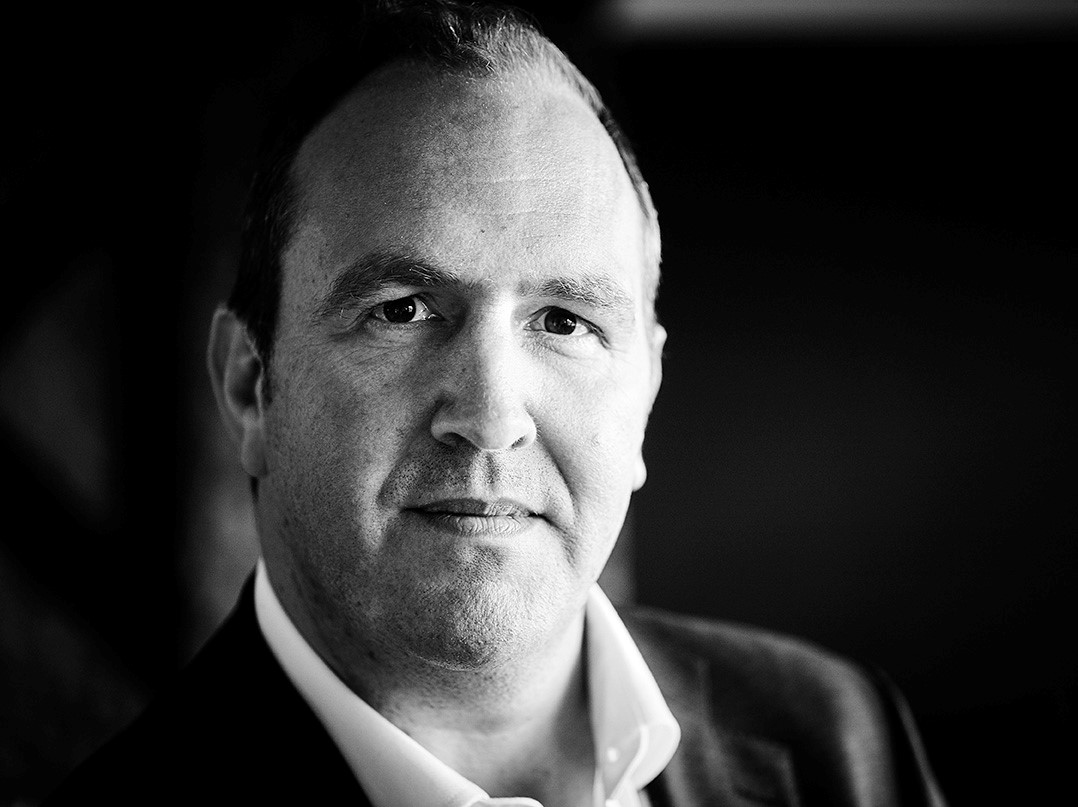
The conversation as it happened, lightly edited for reading. Christian asks, the guest answers.
Christian: You sit in a position where you see companies at their most ambitious and also at their most fragile. But before we go there, I'm wondering, why did you pick investment banking as your career path?
Jan: Very good question, and it starts with, I didn't pick it. In fact, it came across my path. I'm a scientist by training, spent several years in research and development myself. Actually one of those people that worked on a drug that is currently saving lives in HIV for people, together with many of my colleagues. But I always was attracted by business and finance, and I did some finance MBA courses. A fellow student of mine was working in a dealing room. He was a trader, at the head of the trading of an investment bank, and they just IPO'd the company that I was working in. He knew so much about my company that I was really intrigued, and at a certain moment in time he asked, hey, we are doing more in biotech, but actually we as economical people don't really know it, can you come and help us? That's how I ended up over there. I didn't know the world, but it's a fantastic environment to be in.
Christian: There was a coincidence, probably, but what was your plan? What path did you actually think you would take?
Jan: My plan was, when I studied, I wanted to do science. I wanted to work in a pharmaceutical environment, because two decades ago it was a very nice place to be, and still is, and probably even more than then. So my thought was, I work in such an environment. During my PhD already I was intrigued by the business aspect, and I asked my professor, hey, can I do some business courses? And she said no, you cannot, continue to write papers, as a good academic would say. But it was always in me to find that line of science with something else, also in my research and development career.
At that moment in time I looked for the space where a lot of people now call it AI. Already 20 years ago, it existed. I was working on that space, science, data and technology, but also the finance and the business aspect, that overlapping area that was attracting me. I honestly did not know that banks would have specialized people employed. Some of my predecessors were not scientists who were covering biotech or life science. They were economic, finance-driven people. So I think we as an advisory investment banking industry also evolved with having more technical and specialist people in those roles.
Christian: I really like that. And what fascinated you more? Was it more the science of the companies you were able to touch on, or was it the game around it?
Jan: I would say it was definitely the work with different companies at different stages. Many of the listeners will recognize that if you are working in a company, you're responsible for a specific project or a specific team, you get sucked into it, and you don't have the helicopter view always, unless you are at the executive board level. But in this role you are really privileged that you can work with 10, 15, 20 or even more companies, with the highest level of those companies, and in different parts of it. That's what attracted me.
Christian: Was there a moment, you just mentioned a moment when you entered the game of investment banking, but was there a moment when you really understood, well, this is the world I want to be in?
Jan: Yeah, I think so. It took me probably a year or even more before I really understood what the companies were doing, their different business plans, and how investors work. Because at the end of the day we are an intermediary, especially when you are on the sell side, in research analyst, which is how I started. Now I'm working in the banking part. You really need to understand what the market, the investors, expect from a company and how that company is delivering on that. It takes time before you understand the market dynamic and the company dynamic. Once you know that, that's when it becomes interesting, and once you can have a view on where it could go, market for the companies and companies for the market. Then those two different things become of a lot of added value, either for the investors, because you can help them in their investment decision (it's their responsibility, but they need to look at the world and you are privileged to look at a select number of companies), and for the companies. They do not always know what the consequences of geopolitics are, which are really very far away from their day-to-day work, but it does have a consequence. And let's face it, most companies are not on a day-to-day basis connected with the public market, and why things can sometimes be very depressed and sometimes be overhyped. That's called momentum.
Christian: That's an interesting part. So where do you get your information from?
Jan: It's by constantly being in the market space. I often say to my colleagues and co-workers, be on the road, be with the client, whether it's a corporate or whether it's an investor, but talk to them. Have the face-to-face interaction, because it's on the marketplace that it happens. I just want to make the connection with 50 or 100 years ago, and many more years, when people went to the market. They were buying their vegetables, goods, other stuff, but they were also meeting each other there, and it was also a place to exchange information. It's not really different today, the face-to-face interaction. There's, of course, an overload of data coming through our mailbox, chats and whatever systems, but the true added-value info comes from the human interaction, often.
Christian: Yes, and I think Van Lanschot Kempen is a very good example there. I think for 200 or 300 years, I'm not even sure for how long. 300, yeah. They professionalized going on the market and speaking with people. One of the biggest funds in the Netherlands. I'm wondering, at what stage do companies actually come to you?
Jan: Yeah, it's when you are relevant. And to add, Christian, to what you said, yes, we are located in Amsterdam, but on a pan-European basis. So I often say to people, during introductions, only one thing to remember: we're not a Dutch company, but we are a European group. When are you relevant in investment banking to clients? We have two types of clients. It's corporates, companies, CEOs, boards, and of course the investors. When you can bring the right company to the right investor, or we also are active in, when you can bring the right acquisition target to the right buyer and vice versa, and that you're relevant in the information and the advice that you bring to companies. We are currently in a world that is overloaded with info, what we already said. What is the right info, what is the relevant information, and what is the experience that you can bring to your client when it comes to the M&A or to the investment profile? So they come to us, or we are, because we have very often long-term relationships, sometimes 10, 20 years, that we know what a client is looking for and can bring them to them, or vice versa, through truly understanding what they are looking for at a given moment in time, because that also changes over time.
Christian: I'm fascinated by one thing. I think as you are also in a kind of service business, as I am, very often I have the situation where the client thinks he knows what he wants, but usually it's something else that you give him, because you know what he needs. Do you experience that difference, the gap between wanting and needing?
Jan: It's absolutely correct. And of course, I have already a little bit of gray hair. When you are around for a while, you have seen one or two things, versus sometimes first-time CEOs or first-time executives who have not seen such a trajectory. It's also about their expectation, what they think they need or want to have absolutely. And I think that's also where the value of a good advisor or a good professional comes in, to recognize, you are here, you want to go there, you think you need X, Y and Z. Very often it's underestimating what it takes, or having the wrong kind of expectation of what the world needs. I think as a good advisor you can help people in bringing them into the right dimension, often, and they really appreciate it. You open up the horizon, sometimes.
Christian: Can you give me an example of such a conversation where you had to? You don't have to name the company names.
Jan: A classic example is valuation. What am I worth as a company? Some people, yes, they have technology or products that could be worth a lot, but the question is when. Sometimes people think it's worth it because they see peers who do something similar, and those peers are worth hundreds of billions or even more, and they think, hey, I'm doing the same. But they forget that those peers can be connected with a lot of other things, play in a higher league, are more advanced, have more resources behind them. That is a classic, to put people in perspective. Yes, you are worth a lot, but you still have to do X, Y and Z before that will become visible to the outer world. And you are only worth what somebody else is willing to give to you. That's the other thing.
Christian: What kind of companies would you love to see more often come to you?
Jan: I'm a big fan of companies that have differentiated technology. It doesn't always have to be stuff where we can fly to the moon with, but just differentiating, that brings something new and that can be an engine of repetitive success or multiple shots on goal. So I'm a big fan of these platform companies, where you can have multiple products coming out. You can also, if you want, work with larger companies, whether it's big pharma, do collaborations with them. And as you work with your clients and as you work on your own proprietary stuff, you can build your platform and technology going forward, and also surround yourself always with next-level type of people. I truly think that those are companies, generally speaking, that can be the next Genmab or argenx or what have you of this world. That doesn't mean that if you are single asset, or only one or two or three assets, that you cannot be a super successful company. No misunderstanding there. But I see that you have more options to weather the storms. We are in an industry, you know that, Christian, there will be failure, there will be disappointment, 100 percent sure. The only question is, how am I going to deal with it? What are the contingency plans that I put in place, and whatever. So those are companies I really like.
Christian: When you meet a company or a founding team for the first time, what do you tell them? What kind of value do you provide for them?
Jan: Always look several steps ahead of where they are, because in this industry you create clinical data or preclinical data. You have options to go left, straight or right. Whatever decision at any cross point you make, it influences the industry, and thereafter. Sometimes it's also good to reflect, and this is like you do an interview with a person: what would you like to be within five or ten years from now? But that is something that I think, as Europeans, don't hesitate to be bold. You don't have to be aggressive in how you explain things, but be bold in your ambition. Aim for Mars, land on the moon or stars, really, really do that. Because if you know where you want to go, you can start to count back. I've seen the most successful companies in our industry, they had that vision and they were calculating back: okay, if I want to be there, this is what I need to do as a next step. And if you know what you want, you might be surprised that actually one day it will cross your path and you will identify it and you can take it. If you don't know what you want, you will not recognize it. And it usually doesn't come across fancy dressed with a sharp haircut, but usually it comes with mud on the boots and a little bit not obvious. That is an advice.
Christian: What are the other patterns? You just mentioned, you said someone who is very convicted, going to the moon, with mud on the boots. What else?
Jan: Be surrounded by the right people. By the right people I mean, often in our industry, it's who are the investors, the funders of your company. It's not always easy to be surrounded by super specialists or sophisticated people. They give you often hard times, they have also their agenda. But I've seen in situations, not per se now but in previous years, there was easy money available to invest in high-risk, high-reward companies, and still in certain geographies in Europe you find very rich people who invest in super sophisticated companies with the wrong expectation. That is extremely dangerous in our industry, because when you become successful, the only thing that we know for sure is, it will become more expensive. You will have to raise more money. Your company, if you like it or not, you will have to surround yourself with more specialists in very niche areas. So companies grow, companies specialize and companies need more money. If you then have the wrong shareholders that surround you, they will keep you small as a company, or they will push you to prematurely divest or exit the company.
But it's not only with shareholders, it's also with people that you can surround yourself with as a personal advisory board. Not the company an advisory board, but as a person, especially first-time executives or founders: surround yourself with people that will give you an honest feedback, that may or may not have anything to do with what you do, that are not an investor, but can share information or experiences with you in a very honest way. Sometimes those experiences will be nasty, will not be nice to hear, but at least you don't have to hit the wall yourself if they can share it with you. I've seen successful companies and management teams, they were very much open to those things, and those who failed were often wise guys who didn't want to listen, or girls.
Christian: You remind me of the word conviction. What you just said, sometimes conviction is good and sometimes also bad. How do you as an investor jump in when a founder or a founding team are too convicted and too self-absorbed, probably? Where's the balance? It's difficult to grab that, where's the balance between you should know what you want, you should have high goals, but still stay a little bit balanced.
Jan: Yeah, and it's indeed a good question. We always preach that you have to be persistent, you have to be perseverant, because you face a lot of failure and you have to overcome in this business those failures. At the other end, throwing good money into a bad idea is wasted money, and that's a resource or time of good people. So at a certain moment in time you also have to be able to pull the strings. Here it comes back to what are the other options that you have in the company. If you are a one-trick pony, you will do your single trick, sorry. If you can have multiple options, you can go to option two, option three. So that's already something that we briefly touched on. I've also seen very successful entrepreneurs and companies who started with an idea, pursued it for a while, but along the way saw something better or more efficient, and were not afraid of, oh, this molecule that I'm developing, it's not really going good anymore, the competition may be ahead of us, but I'm finding something else. I can convince my board, I can convince my investors that this thing is better and we would probably also be better going over there.
A company called Agomab, for instance, which we recently brought to the Nasdaq stock market, the first in probably five years out of Europe. They were not born with the molecules that they currently have in clinical development. They were born out of an antibody that was found in argenx, but they were really strong enough to see other opportunities, move from antibody to small molecule. That's a big step, right? And become successful like that. That I think is also where you see the true entrepreneur, but also, as you ask, at which moment do I realize it's not going as fast as I thought, I can do something else that can create more value going forward, and abandon the additional ideas. Other examples are there as well.
Christian: I need to ask you, what are investors right now looking for in companies?
Jan: They're professional investors. Return tomorrow, probably. I think it's also not easy for investors, because we should not forget, those entrepreneurs listening to the podcast, an investor also has a client. An investor has LPs, limited partners, that invest in their fund, and they have certain expectations, which they have been promised, returns within a certain time frame. For VCs it's typically 10 years, 12 years. Public market investors, they have also big funds that invest in them, or retail that invest in them, that have expectations. What I'm trying to say is, an investor is also somebody who manages money on behalf of somebody else, except if you're a very rich person, then the family office does something else. But you have to keep that in mind, because it also determines the way these investors behave, what their objectives are, what they are looking for. VCs are looking for three to five or even 10 times their investment on a time frame of three to five or six years. They are not satisfied with the return of 50 percent value over the next two years. A public market investor, however, would be very happy, or very often, to get it. So it's all dependent on where am I, what is my risk profile, what is my time frame that I have. And keep in mind, an investor is somebody who invests money, often on behalf of somebody else, and is driving often already the exit or other things over there, which might be materially different from you as an entrepreneur in the time frame and in how you spend them.
Christian: Yes. What do we think about de-risking in investments? It has gotten more important over the last five years, I think. Earlier, companies and investors invested in startups with a higher risk profile, in preclinical, even preclinical IPOs were a normal thing 10 years ago. It was not the case anymore in the last couple of years. So I'm wondering how the idea of de-risking changed.
Jan: Yeah, it's a really very interesting question. It's fresh in our mind still, and there you saw that, simplistically speaking, one experiment on a mouse was already good enough to IPO over the last couple of years, 2020. More recently you really need to be much more mature, much more solid, to attract those high-level investments. What we also see is that because money has been more critical (I'm not going to say scarce, money is there, funds are there to invest in, money is there, that's important), we are running statistics of European public and especially private companies that receive funding. 2025 has been as good a year as 2021, which was a top year. So the money is there, but what you see is that money is floating in a direction of the winner takes it all. The other statistic is that about 15 percent of the number of transactions that took place in 2025 represented 50 percent of the capital put in those companies. So that means a small amount of companies raise an enormous amount of money, and investors obviously look at each other. It's in the human nature. So business development teams of pharma and other companies look at each other, what is hot at a certain moment in time, a lot of people are driven in that area, and the ones which are not that hot at that moment get less attention.
But let's take the example in Germany of Tubulis. With 400 million raised end of last year, this was the biggest private fundraise, I think, ever of a biotech company, and the second biggest of a European life science company. The other one's Google Ventures. Incredible. Yeah, it's just incredible, and it shows that our European ecosystem is also moving up and things become bigger. Certain companies can raise a lot of money. Of the top 10, just to throw another number in the mix here, of the top 10 biggest fundraisers in biotech, approximately half of them occurred in the last 18 months. And that's a statistic that you can actually roll over year after year after year, it's always like that. So money is there, but it's floating into those who can tick the boxes.
Christian: Look at Gilead, look at Gilead buying Tubulis right now. And you know the founders of Tubulis. Tell me about your interactions.
Jan: I think we identified, or had the first meeting with, Dominik and the team when they finished their Series A, by the way. There were some local early-stage investors invested in them, also some Benelux investors there, with Fund+ but also BioMed Partners. We started to engage, because it was actually an archetypical company, like we liked it, like I said before, a platform. Of course a young team, but an eager team, knowledgeable, so realistic in what they could do, and especially delivering on promises made. Quickly they realized with their platform they could also do business development deals with BMS and Gilead thereafter, and created some non-dilutive funding, but they also were able to attract the next level of investors surrounding them. So you clearly see a step upward spiral, with EQT Life Sciences joining them in the Series B, very good clients of us. Also Nextech, we know the guys also really very well, at Transatlantic, both Europe, Zurich-based, and the US-based investor, who then brought the next level of investors. But you clearly see that it's constantly adding up different options, proprietary pipeline, and then superb data being presented last year at the medical conference, where you could see, okay, this is really making the difference. So ticking the box over there.
It's, of course, a very nice number that a big pharma player or bigger biotech player, Gilead, is paying for them. They knew each other also. We see that very often, that companies in development stage get acquired by people or companies that they already know, that they already have partnerships with. I'm very glad for the investors, I'm very glad for the founding team over there, and I truly hope that they can continue to be very successful, maybe as a research entity within Gilead. And I'm sure that there will be people who will start their own ventures that just learned the stuff.
Christian: A blueprint and a great hero story also, somehow, about the leadership team that they were able to get to that success level, from many people you don't know. Anything else? Because they have to jump out of the wagon earlier. Usually the founding team is not the one exiting. So it's good they're still on board.
Jan: Yeah, then they could grow. We should not underestimate how different it is between founding a company, raising venture capital, transitioning into a clinical-stage company, and ultimately a commercial company. And the latter, really, from clinical to commercial, it's a totally different game. There are only a few companies that really can do that. Some of them are being acquired before they have the chance to. And very often the founding CEOs are not the persons who are also the commercial CEOs.
Christian: How do you see that as an investment banker? Let's talk about leadership in general, but when the founding teams or people in early stage should actually leave the company, what's your take on that? Do you have an influence on that?
Jan: Sometimes, yes. Because, of course, we have also the public markets, and we speak to boards and shareholders. It's sometimes painful, and it's often also a long process. But, of course, when things go well, but the management team or certain leaders are not the right leaders, it's very difficult to discriminate that. But when things really do not go well and when stakes are high, then tough decisions are being taken and personal egos have to be put aside, because there's so much else at hand. The strongest situation is the one where you as a leader recognize, I've run a journey, I know I'm not the best person anymore, and I will allow for a transition period over a year. And then they need people like you, Christian, to assist them into that. It's no surprise that very successful companies also in that part, they are very good in the transitioning phase, to transition the senior leadership into the next level of excellence. And that's the expertise you need. Of course, we're super biased with our friends at argenx, but you see that the founding CEO has identified or said publicly, I'm going to move into the chairman position, but somebody from the executive team, who was there already for a few years, will take over the CEO helm. And that goes really very, very smooth there. The market also absorbs that in a very smooth way as well.
Christian: Yes, yes. Very good example, thank you. And you talked about being deliberate about your financing, and you're basically a capital market strategist. This takes all those skills. So when a company comes to you, when a founding team comes to you, or a founder, two people maybe, they say, how should we build our team? What skills do we need? And you happened to tell them something about capital market strategy. What are the real skills here?
Jan: I think it's all about, can you play in the top league? Because that's a bit what capital markets are. Especially a lot of people are attracted by the Nasdaq US market. People sometimes forget that this is Champions League in football, and not every player, a good national player, is not per se a Champions League player. It also requires a good surrounding over there and a path to get there. Bayern München was not born to be a Champions League player. They're already there for decades, but they also had to grow in it.
Christian: Are you also saying that you need to take money in your hand in order to buy one of the big good players?
Jan: Actually, it's a good remark. Because as a small company, you cannot always afford the best people. A public listing gives you a means to attract also talent. Because, yes, it usually goes hand in hand with fundraising, and in our business a lot of people get some warrants or shares, which attracts them a lot. It's often also for US-based people. They are there, of course, for a salary to be earned, but the belief that these companies can really be 10-baggers, can be upside. Then you also want to have maybe some flesh on the bone and some shares in there that they can monetize. So it's a nice remark, but it's also a reality that plays to attract the next level of people as well. And you need to have Champions League type people on every function at the right moment in time. It's totally useless to have a superb chief medical officer, let's say, in your company, when you're three years away from testing the first in-human test or other type. So each time as you progress your company, try to attract the right people that you can have at that moment in time, or get access to them. Not always maybe as an employee, but sometimes also maybe in your board over there.
So it's the team. An excellent team can create a lot of value with a good project. An excellent project with a mediocre team is a recipe for failure. That's something that we often recognize as well. We're not psychologists, we're not in the executive search business, but we do recognize who can be winning companies, winning people that have the willingness to change things, but also can attract good people, bind good people to them, and know what drives value. And today, almost 2026, the quality of data is an extremely important thing. That requires funding. That requires good people to make the right clinical trial, to make the right experiments and not cut corners. So it's really several parameters that make you a winning enterprise.
Christian: Yes. And in summary, on the opposite side, what do you think are the patterns to fail?
Jan: It's not the right funding. And sorry, from an investment banker, I'm always a little bit on the money side. What is the right funding? Because it's extremely important. CEOs spend 20, 30 percent of their time on managing this funding and the investors.
Christian: You said the CEO, not the CFO.
Jan: No, no. CEO. In early-stage companies, it's really the CEO who sets the strategy and whatever, of course helped by his executive team. But very often in early-stage companies, the CFO role, it's not a CFO role. It's actually a financial manager role, who makes sure that the accounting is in place and stuff. It's only when companies mature that it becomes truly a strategic CFO role, where you need those type of skills as well. But early stage, it's especially a CEO role.
Too stubborn on what you're doing, thinking that you have gold in your hands, but not realizing that the chances that you are the first one who is going to work on this technology or work on this target, that you're the first one, statistics tell us you won't be. Probably in China or whatever cliche location, it's a competition. Someone will have thought of it before. But the environment that you work with is also a big aspect of your success. I can't emphasize that enough. It's not a coincidence that in Boston, for instance, there are a lot of successful companies, because they can learn from each other in a very easy way, so fast. The same goes true in Europe. You really have spots like, for instance, in the Munich area, or in the Benelux, in the Leiden area or Flanders, or in Sweden, Denmark, Copenhagen, big spots of very successful companies. France nowadays, also a lot of high-quality companies. There's a reason why they are there. And to make the circle around, I should mention Switzerland, but then I'm done, I think, in the European space. It's not happening somewhere in a very distant location in Europe. It happens in spots.
Christian: What is the right funding? You mentioned that. Can you give me a mini MBA at this point? What is the right funding at any stage? Is there a rule to live by, 12 months run rate, or what's the right funding?
Jan: Definitely more than 12 months. It's two aspects, in fact. It's the amount of money, and money does not have a color. A dollar bill is a green bill, but it's where does this money come from? That's the other thing. So in terms of amount of money, if you're working with somebody else's money, VC, institutional investor, not your own money, you have to be accountable for what you do with that money in a certain time frame. We work in this industry with steps, with milestones, that you achieve things. When you reach a certain milestone, you often de-risk the next step. Clinical data, preclinical data, the next step is clear. So if it's money that you manage for somebody else, it's useless to have funding for five years with two, three milestones in between. That money that you would use in the fifth year is going to sleep for four years. If I'm an investor, I want my money to be at work, to be of value in the next five years. 12, 24, maybe 36 months. And I will make sure that I have sufficient access to the next step, but you're not getting it until the milestone is there. So that's the run rate, enough to get your next milestone, more than enough, because there will be delays. It will be more expensive than that.
But I would say the argument is the quality of where the money comes from. It's so important in this environment. Take Tubulis as an example, we discussed it a few moments ago. If there's one thing that you see, the quality, or even of the early-stage investors, the first investors, and I know some high-net-worth individuals who were there, these were quality people, quality investors that also helped in building the company in the run.
Christian: So having the right run rate, or having enough money for the envisioned run rate, but also picking the right investor?
Jan: Picking the right investor. And here I would like to add, diversify that investor. Meaning, if you have investors who all think the same, that can be great, but at a certain moment in time things can change in the world. Look at geopolitics that we have today. Look at how we currently in a European environment look at, for instance, the US. That view has materially changed over the past, let's say, 12, 18 months. If everybody from your investor base is sitting in the same corner, something happens in that corner, it might become very, very dangerous for your next step. So a variety of sophisticated, let's call it VC-type money or institutional money, some money which is more linked to corporates, which are not working out of closed-end funds, corporate venture funds, but also, if it's possible, from not too much, but a little bit maybe from government-oriented money. In certain countries there are really very good quality names there also. I'm referring to BPI in France, InvestNL in the Netherlands, Belgium has very good funds over that as well, Sweden as well. And if possible, very strong families. Now I'm putting the wish list of over there, but you have different type of money, different ways of thinking. Family money often thinks in generations. They don't care about the next performance next year or the next quarter. It's about preservation and company building for the next generation. If you have that voice also in your company, it really brings another perspective versus the next quarterly earnings of publicly listed companies.
Christian: What's for you the difference between, you mentioned just family businesses. Very often family businesses end up in philanthropy. I'm trying to understand from your perspective, what is the difference between philanthropy and really investing?
Jan: In our business, philanthropy is not a good idea. And there's a lot of failure, it will take a lot of time. If philanthropy, if you mean by that, I have a lot of money, I made it in a business outside of life sciences, so I am not so familiar with the ins and outs of it, but I am investing, for instance, money because I have somebody in my family who has a specific disease. It usually is not a good way of funding your company, because that person might have expectations of quick solutions for the family member or what do you have, and is not acquainted with the dynamics of our industry, of failing, of high dilution of shareholdership, and a lot of money to take the next step. Most businesses are ones where there is no dilution. You can keep 100 percent of shareholding, and it creates cash with which you can do the next type of step.
Philanthropy is good when it comes to niche indications. I'm thinking of rare disease, where you can have patient organizations which can get certain money from a philanthropy or from a philanthropic origin that can then put it into the right environment where there's, again, knowledge of it. Then I think it's an excellent way of working, next to, of course, philanthropy for the general good of healthcare and patient services, but not to fund a clinical trial.
Christian: Very clear, thank you. How will investment banking shape over the next years? Where do you expect the most disruptions to come from? I'm speaking of AI, but maybe it's from somewhere else.
Jan: Yeah. AI is definitely, like in every knowledge-based environment, important. We embrace AI to a very large extent, because there's a lot of sophisticated work that we need to do, but it's also fair to say that there is also just work that needs to be done, and which is done by often our junior colleagues and so on. A lot of the work that five or more years ago a junior person would spend days or weeks on can now be done in five minutes. That means that the level of work that our colleagues can do also goes to a higher level, more added-value type of work. I think that investment banking, where you advise companies in the buy or in the sell of a company, or also very complex situations of bringing companies to the public market in an ever-increasing, more complex regulated environment, I'm sure that AI is not going to solve that in a very near term. So our job will increasingly become more complex. And I will just reiterate the small example we said before. 20 years ago, investment bankers in loss-making biotech did not have a PhD or a medical doctor degree. In our team, 70 percent of the people come with a medical, pharmaceutical or scientific background. It becomes more sophisticated as the complexity increases.
Christian: Would you encourage young people to go that career path of investment banking?
Jan: It still is a great starter, a first step after school. And this is not me saying, because I had other jobs before I went into investment banking. But our youngsters, and those who are afterwards going elsewhere, say, I learned so much in such a short time. The learning is just being a professional, how to behave professionally, because you work for a client. You work in a very professional environment, whether it's with us or with other banks, and you get access to very sophisticated, complex things that you cannot learn in a school. So you have a very steep learning curve. And yes, there is about 15 to 20 percent of turnover of staff in investment banking, generally speaking. If not everybody, but definitely most of the people in our teams always go to investors who are good clients of us, or they go to companies where they can take really good roles. So it's very often, for those who leave investment banking, a good step into very high-profile jobs where they can combine science with finance or business. But I would say today, it's not that easy to enter. So people need to do a lot of internships over there, and they are welcome to do internships as well.
Christian: What's something about your work that you really enjoy at the moment?
Jan: For me it's like your podcast, Willing to Win. Winning for and with the client. We work with them and for them, but when we can have a win like, for instance, being mandated on a trajectory like with Agomab, first company going to Nasdaq in several years, where you know these guys, they are really winners that you can go along with, work with the best of the world in terms of legal and other banks, with such a team take it over the finish line. That's super rewarding for me, when the client that we work with has a fantastic success. That's incredibly rewarding for us and for our team. You see our people really take pride. They like to have the tombstone of that mandate as well.
Christian: Yes, very good. I think I was missing one question that I'm really interested in. At which point should companies come to you? Is it too early, is it too late?
Jan: When they got an offer in their box that somebody wants to acquire them, whether they are small or big, please call a professional like us or some of our peers, because you cannot underestimate how much value that can be created elsewhere. And value is of course, we think of money, but do not underestimate that there are a lot of other things that can be extremely important when you sell or when your company gets acquired. So really, don't hesitate, please call, because not doing it is actually a material mistake for yourself, the people in the company and anybody. Call us also to build a relationship when you don't need us. It is at the end of the day also a relationship where you must have people that will run for you, that will go through the fire for you, even if it's only an advisor, but the road is very bumpy, that you have people that you have a good personal click with, that you can trust, because we're dealing with very sensitive material, and that you know when the road gets bumpy that you can go together through it.
I see that the mandates that we work on are coming to the finish line when people know each other for a very, very long time, when they can be outspoken in opinions. So call us when you want to build a relationship for something that you maybe want to do two, three years down the road. Just an example, again, of Dominik of Tubulis and of Tim Knotnerus of Agomab. My first meeting with Agomab was the day before the lockdown of the first COVID, which was mid-March. That's when I really, because we had to leave the building because the whole city of Amsterdam was being closed down. We did the IPO early this year. We also did some other things in between. With Dominik, the same. Many, many years ago, before anybody had an idea it would be such a success, we were already talking, and it was not like, I want you to do something tomorrow or the day after. No, we were building the relationships and added value, left or right. He came to our conferences, Dominik, I'm now referring to Tubulis. He came two years ago to our conference, was there, we gave a podium to him, he could interact with investors that also became investors later on.
Christian: The rest is history, as you say. Very nice. We are at the end of this conversation and my last question is, is there a small thing that makes your day immediately more enjoyable?
Jan: When I have the feeling that we can switch on the machine and it runs like an oiled machine. That's an incredible feeling, that you are working with these competent people, something comes in, needs to be executed fast, and we can just push a button and everybody knows what to do. That's a fantastic feeling, that we can do that with our colleagues. That makes my day really good.
Christian: Very nice. Thank you very much, it was truly a pleasure talking to you. Thank you very much, Jan, and looking forward to speaking to you soon again.
Jan: Thank you very much, Christian, for the excellent questions.
If you think you need to talk to this guest, reach out to me and I am happy to make a connection. Christian Rados, christian@rados-recruiting.com
All episodes and the problem pages